
 Image 1 of 2
 Image 2 of 2
YOU MIGHT ALSO LIKE
GARDEN SITE: ☀️-⛅ Average, medium to wet, well-drained soil. Prefers rich, moist, well-drained locations in part shade.
SIZE: 12-20 ft. tall/long SPREAD: 3-6 ft.
FLOWERS: Showy, white fragrant blooms. July to September.
WILDLIFE: Attracts hummingbirds and bees.
LARVAL HOST TO: Mournful Thyris, Clematis Clearwing moth
ZONE: 3-8
Clematis virginiana is a vigorous, deciduous vine with masses of showy, pure white flowers that provide both color and charm during the fall months. The striking visual display continues well into winter with prolific tassels of showy white seed heads. To control growth, this plant should be given a "hard pruning" in early spring before new growth appears. Best when used in native woodland gardens or naturalized areas where it can be allowed to scramble along the ground and over fences. Tolerant of Black Walnut, shade and deer.
GARDEN SITE: ☀️-⛅ Average, medium to wet, well-drained soil. Prefers rich, moist, well-drained locations in part shade.
SIZE: 12-20 ft. tall/long SPREAD: 3-6 ft.
FLOWERS: Showy, white fragrant blooms. July to September.
WILDLIFE: Attracts hummingbirds and bees.
LARVAL HOST TO: Mournful Thyris, Clematis Clearwing moth
ZONE: 3-8
Clematis virginiana is a vigorous, deciduous vine with masses of showy, pure white flowers that provide both color and charm during the fall months. The striking visual display continues well into winter with prolific tassels of showy white seed heads. To control growth, this plant should be given a "hard pruning" in early spring before new growth appears. Best when used in native woodland gardens or naturalized areas where it can be allowed to scramble along the ground and over fences. Tolerant of Black Walnut, shade and deer.
YOU MIGHT ALSO LIKE
GARDEN SITE: ☀️-⛅ Average to moist, well-drained soil. Can tolerate occasional drought and wet soil. Tolerant of a variety of growing conditions but prefers organically rich soil with good drainage.
SIZE: 30-50 ft. Spread: 6-9 ft.
FLOWERS: Large, orange to yellow or reddish-orange trumpets. March-May.
WILDLIFE: Attracts hummingbirds and butterflies. Mammals such as beaver and deer will browse foliage.
LARVAL HOST TO: Rustic Sphinx, Laurel Sphinx and Waved Sphinx moths
ZONE: 5-9
DISTRIBUTION: Southeastern United States
If you want to attract hummingbirds to your garden why not choose a native, flowering plant they can’t resist? The large, yellow to burgundy trumpets of Crossvine is a favorite of hummingbirds and is also attractive to many other wildlife species as a nectar and food source. A vigorous and disease free plant, Crossvine is best planted along woodland edges or in a location where it can climb freely. A perfect choice for naturalized areas that stay evenly moist, or in pollinator, native and butterfly gardens. Resistant to heat, drought, soil compaction and heavy shade. Blooms best when planted in sunnier locations.
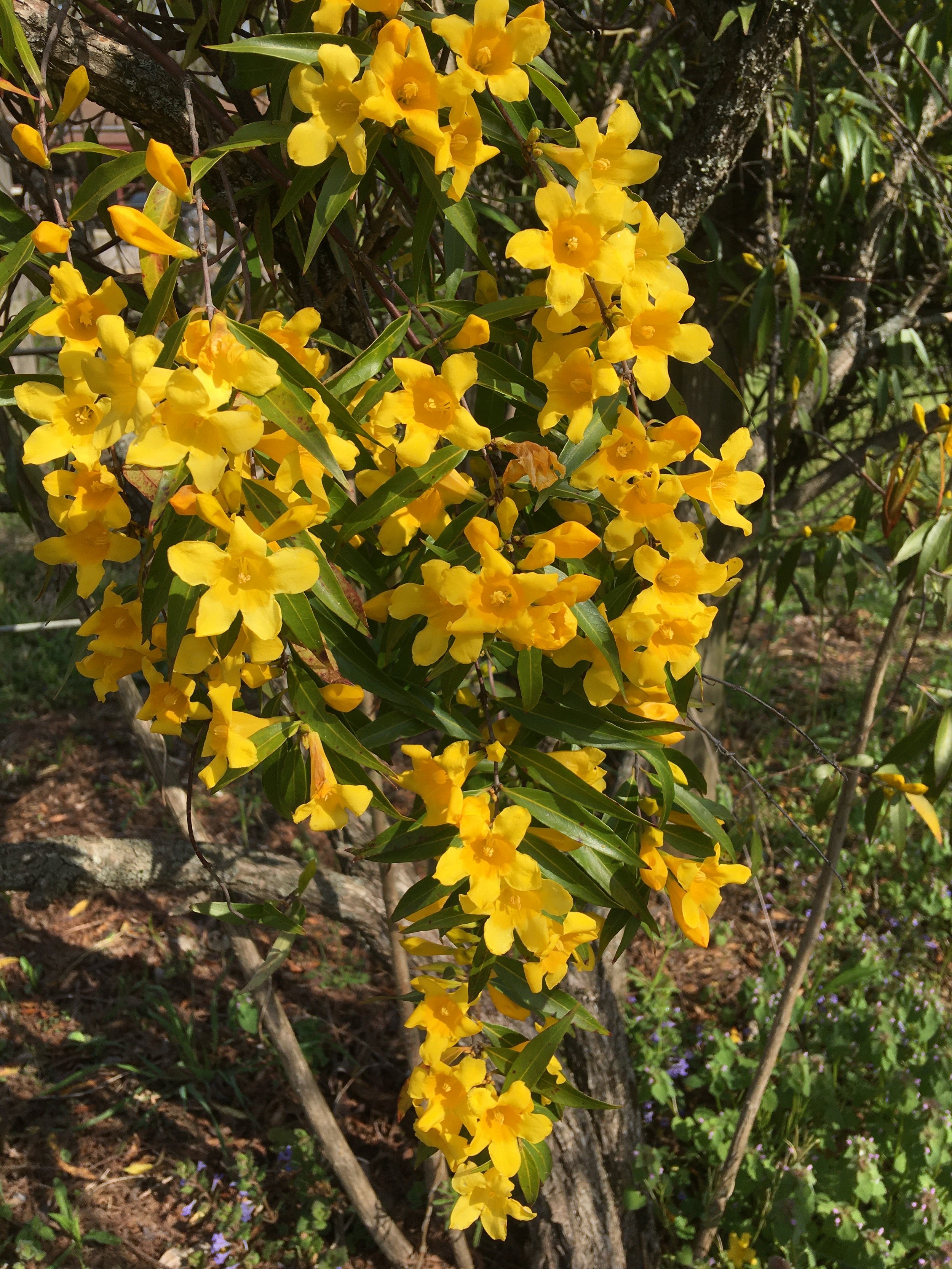
GARDEN SITE: ☀️ Moist, Organically rich, Well-drained Soil.
SIZE: ⬆10-20 ft. ↔10-20 ft.
FLOWERS: Yellow blooms February - April
WILDLIFE: Attracts Bees & Hummingbirds
ZONE: 7-10
DISTRIBUTION: AL , AR , FL , GA , LA , MS , NC , SC , TN , TX , VA
What’s yellow-flowered, EVERGREEN and blooms before many other plants even as early as in February - our native Jessamine! Grow this plant on a trellis, arbor, pergola, wall or fence. It’s also a good cover for a porch or you can also let climb into smaller trees. This vine attracts native bees, hummingbirds and Spicebush Swallowtail butterflies. It thrives in moist to moderately dry soil and needs at least 3 to 4 hours of sun each day for best flowering.
The species name sempervirens derives from the Latin semper meaning ’always‘ and virens meaning ‘green’. Carl Linnaeus first classified G. sempervirens as Bignonia sempervirens in 1753; Antoine Laurent de Jussieu created a new genus for this species in 1789. Gelsemium is a Latinized form of the Italian word for jasmine, gelsomino.
Note! All parts of this plants are poisonous if ingested.
Humans have been poisoned, especially children, by sucking nectar from the flowers, mistaken as honeysuckle. There is a risk for dogs that eat any part of the plant. Seizures, breathing difficulties, and death can follow the initial symptoms of muscle weakness and paralysis. All livestock, like cattle, goats, chickens, and geese. Horses are also affected by this plant’s toxicity. The flowers, leaves, and roots are poisonous. source
GARDEN SITE: ☀️-⛅ Average, Medium, Well-drained Soil. Roots like loose Mulch.
SIZE: ⬆6-8 ft. ↔3-6 ft.
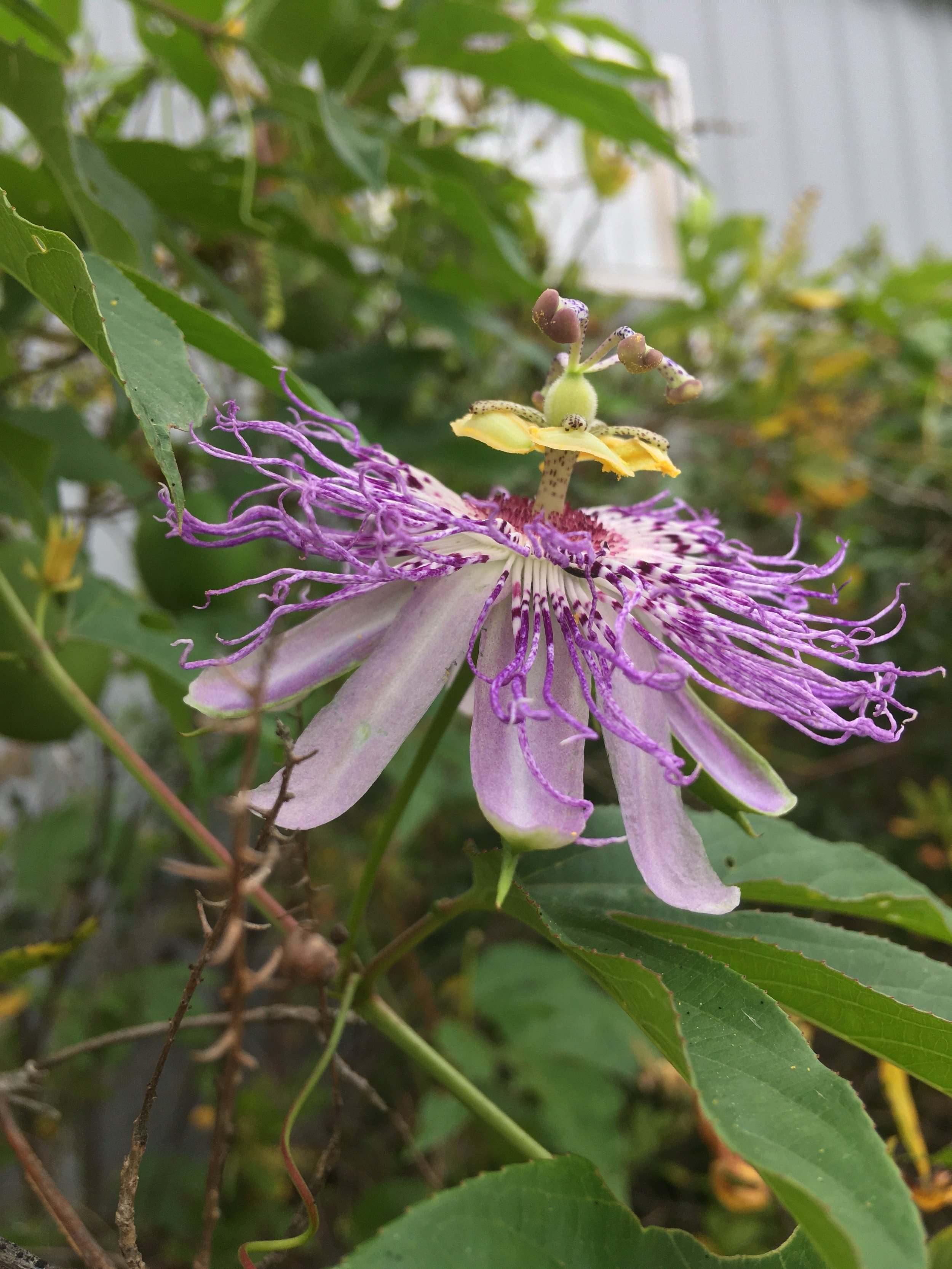
FLOWERS: Fragrant, Fringed, Purple-White Blooms June to September
WILDLIFE: Attracts Bumblebees and Butterflies.
LARVAL HOST TO: Gulf Fritillary, Zebra Longwing, Crimson-patch longwing, Red-banded hairstreak, Julia butterfly.
ZONE: 5-9
DISTRIBUTION: AL , AR , DC , DE , FL , GA , IL , IN , KS , KY , LA , MD , MO , MS , NC , OH , OK , PA , SC , TN , TX , VA , WV
Also called Maypop. A must have native vine to attract bees, butterflies and produce edible tropical tasting fruit!
Perennial vine that uses tendrils to attach itself. If the plant does not have an upright support it will scramble along the ground making a ground cover. Unique flower. Larval host to several types of butterfly. Spreads by thick root suckers. May be used on Trellises, Arbors, Walls or Fences. Fruit is edible and can be eaten straight from the ripe fruit or made tropical like juice.
The plants were given the name Passionflower or Passion vine because the parts of the flower were once said to represent the Christian crucifixion story, Passion. The 10 petal-like petal parts represent the disciples of Jesus, excluding Peter and Judas; the 5 stamens the wounds Jesus received; the knob-like stigmas the nails; the fringe the crown of thorns. “Incarnata” means 'to make flesh', re-incarnation respectively.





GARDEN SITE: ☀️-🌤️ Avg-medium, fertile soil.
SIZE: ⬆15-30 (occasionally 40 ft.) ↔10-15 ft. You can trim twice a year to keep smaller and get more blooms
FLOWERS: Lavender blooms sized 4+6 inched long April-May
WILDLIFE: Adored by hummingbirds, bees, skippers etc. pollinators,
ZONE:
DISTRIBUTION: AL , AR , CT , DE , FL , GA , IA , IL , IN , KY , LA , MA , MD , MI , MO , MS , NC , NJ , NY , OH , OK , PA , RI , SC , TN , TX , VA , WV
Less aggressive than the Asian species. This clone originates from Morgan Co, TN.